
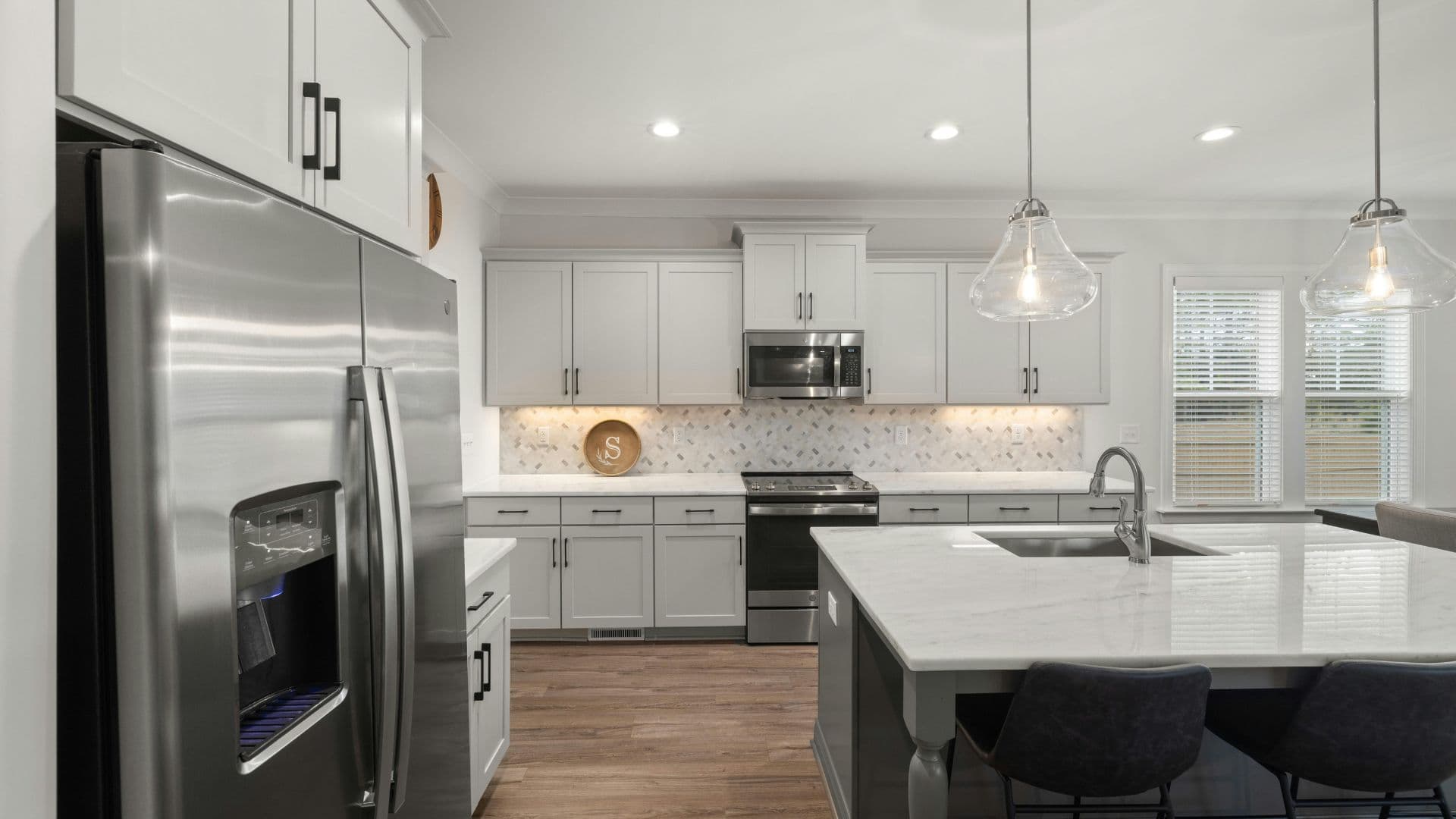
Countertops are one of the three or four decisions that define how your remodeled kitchen looks and how it performs. Get them right and you barely think about them for 15+ years. Get them wrong and you live with daily frustration. Here's a full breakdown of the 10 countertop materials Capital Region homeowners choose from, with honest pros, cons, and 2026 pricing.
All prices below are installed cost per square foot in the Capital Region — materials plus fabrication, delivery, and installation. A typical kitchen uses 40-60 sq ft of counter, so multiply accordingly.
1. Quartz (engineered stone)
Price: $70–$150/sq ft installed. Best for:almost everyone. Maintenance: virtually none.
Quartz is HomeNest's most-specified counter by a wide margin. It's engineered from 93% ground quartz and 7% resin, giving it the hardness of natural stone with no porosity, no sealing, and a consistent look across slabs. Brands like Caesarstone, Silestone, and Cambria dominate mid-to-upper market; off-brand quartz is available at the lower end of the price range.
Pros: zero maintenance, extremely stain resistant, consistent pattern, warrantied. Cons: not as heat resistant as natural stone (avoid placing hot pans directly), and some patterns look obviously engineered.
2. Granite
Price: $60–$130/sq ft installed. Best for:homeowners who want natural character. Maintenance: seal every 1-2 years.
Granite was the dominant premium counter from roughly 1995-2015, got overtaken by quartz, but remains a strong choice. Every slab is unique — if you want your counter to look like nothing else in the neighborhood, granite delivers. Heat resistant, scratch resistant, and reasonably stain resistant with proper sealing.
Pros: natural beauty, heat resistance, unique slabs, wide price range. Cons: requires sealing, some colors (black galaxy, absolute black) have gone in and out of fashion hard, and darker granites can show etch marks from acids.
3. Quartzite (natural stone, not quartz)
Price: $100–$180/sq ft installed. Best for:people who want marble's look with more durability. Maintenance:seal every 6-12 months.
Quartzite is natural stone — not the engineered quartz above — and is typically harder than granite. Some quartzites look strikingly like marble with dramatic veining (Taj Mahal, Super White, Calacatta quartzite varieties). If you love the marble look but don't want to babysit it, quartzite is the compromise. Higher price than granite, but arguably the most beautiful natural stone option.
4. Marble (Carrara, Calacatta, Statuario)
Price: $80–$200/sq ft installed. Best for:aesthetic purists willing to maintain it. Maintenance:high — seal every 6 months and accept etching.
Nothing else looks like marble. White background with gray veining, classic, timeless, undeniably beautiful. Also the highest-maintenance counter on this list. Marble stains from red wine, coffee, tea, and anything acidic. It etches (dull spots) from acids even with sealer. For serious cooks, marble is an ongoing frustration; for baking enthusiasts or homeowners who accept patina as character, it's a dream.
5. Butcher block (solid wood)
Price: $60–$100/sq ft installed. Best for:islands and prep areas. Maintenance: mineral oil monthly for year one, then quarterly.
Butcher block brings warmth to a kitchen and is surprisingly practical for island tops and prep areas. Maple and walnut are the most common species; end-grain versions (where wood fibers are vertical) are more expensive but gorgeous. Not recommended as the only counter in a kitchen because of maintenance and water sensitivity near sinks.
Pros: warm, natural, good for chopping, sandable when damaged. Cons: needs oiling, stains from anything wet, scorches from heat, not great near a sink.
6. Laminate (modern options are better than you remember)
Price: $30–$50/sq ft installed. Best for:rental properties, budget remodels, secondary kitchens. Maintenance:none.
Modern laminate (Formica, Wilsonart) has come a long way. High-pressure laminate with deep-drawn edges and realistic stone-look patterns can fool most people at arm's length. Not appropriate for high-end Capital Region kitchens, but genuinely useful for budget-conscious renovations where $50K isn't in the budget.
7. Concrete
Price: $90–$150/sq ft installed. Best for:modern or industrial kitchens. Maintenance: seal every 6-12 months.
Concrete counters are poured on-site or in a fabricator's shop, then sealed. Deeply customizable — any color, texture, edge profile, or inlay. Heavy, so cabinet boxes may need reinforcement. Develops a patina over time that some love and others hate. Most common in modern/industrial kitchens in Saratoga and Albany lofts.
8. Soapstone
Price: $90–$130/sq ft installed. Best for:traditional and farmhouse kitchens. Maintenance: oil with mineral oil as desired.
Soapstone is a soft natural stone that's been used in kitchens for centuries — the gray-black color and smooth feel are unmistakable. Non-porous, so no sealing required (oiling is purely aesthetic, to deepen the color). Scratches show (some say this is character), and it dings more than granite. Perfect for a New England farmhouse aesthetic.
9. Solid surface (Corian, LG Viatera)
Price: $60–$90/sq ft installed. Best for:seamless installations with integrated sinks. Maintenance: none.
Solid surface is an acrylic/polyester blend that can be thermoformed into shapes and seamless joints. Integrated sinks and drainboards look beautiful. Less heat resistant than stone; scratches more easily but can be sanded out. Has fallen out of fashion in recent years but still a solid choice for specific aesthetic goals.
10. Ceramic or porcelain tile
Price: $40–$80/sq ft installed. Best for:rustic or Mediterranean kitchens, or homeowners who want DIY-friendly budget counters.Maintenance: grout sealing annually.
Ceramic or porcelain tile counters are rare in modern kitchens but still used for specific styles. Heat resistant, durable, and inexpensive. Main drawback: grout lines collect food residue and need sealing. Large-format porcelain tile has made a modest comeback with tiles up to 5 ft × 10 ft that minimize visible grout lines.
Capital Region buying considerations
A few things specific to the Capital Region market:
- Stone yards. Most Capital Region fabricators source from Albany, Schenectady, or Troy stone yards. Granite and quartzite selection is excellent; exotic marbles and soapstones may need to come from New York City or Boston yards.
- Turnaround time. From template to install, plan on 10-14 days for quartz and granite; 2-3 weeks for specialty stone; 3-4 weeks for solid surface or concrete.
- Edge profiles. Eased (slight rounding) and mitered (waterfall) edges are most popular in 2026 Capital Region kitchens. Decorative edges (ogee, double-ogee, bullnose) have largely fallen out of style except in traditional settings.
- Price includes fabrication. HomeNest quotes include templating, fabrication, delivery, and installation. Tearing out and disposing of existing counters is separate but we bundle into kitchen remodel scope.
Which countertop is right for your kitchen?
For most Capital Region kitchens, the decision comes down to quartz (low maintenance, consistent look) vs. natural stone (unique, more character but more care). If you want a white-and-veined look, pick quartz that mimics marble unless you're committed to maintenance. If you want a one-of-a-kind piece that your neighbor won't have, pick granite or quartzite. To ballpark the full kitchen budget around your counter choice, try our cost estimator.
HomeNest walks every kitchen client through material selections at the design phase — we have sample slabs and can arrange stone yard visits for larger projects. Full details on our kitchen remodeling scope, or kitchen renovation for lighter scope that can still include a counter swap. Our clients in Troy often see stone selection as one of the most rewarding parts of the project.